
The Rise of Hybrid Spaces: Blending Community, Retail & Hospitality

Clockwork Architecture + Design
The way people use commercial spaces is changing.
For years, development was largely organized around a single purpose: a restaurant was a restaurant, a retail space was a retail space, an office was an office. Today, that model is becoming less rigid.
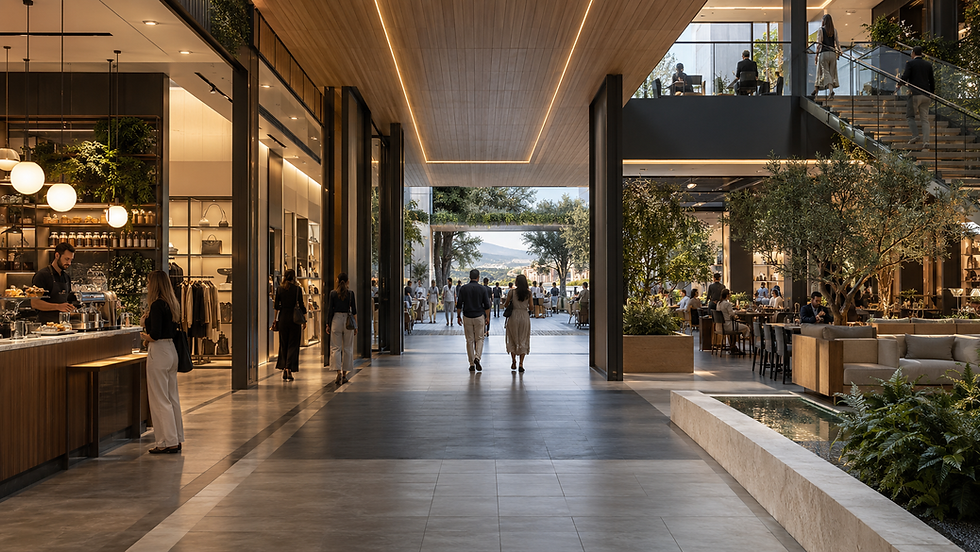
More projects are being designed as hybrid environments—spaces where dining, retail, entertainment, work, wellness, hospitality, and community activity overlap.
This shift is not just about creating something more visually interesting. It reflects a larger change in how people want to spend their time. They are looking for places that offer more than one reason to visit, more opportunities to stay, and more ways to connect.
For developers, owners, and operators, that creates a new design opportunity: build spaces that can do more.

From Single-Purpose to Multi-Experience
The traditional commercial model often depends on one primary transaction.
A customer enters, completes a specific activity, and leaves.
Hybrid spaces challenge that pattern by layering multiple experiences into one environment.
A hospitality concept might also include:
retail merchandise
flexible event space
outdoor gathering areas
coworking or lounge zones
food and beverage
wellness programming
community events
pop-up activations
The goal is not to simply place several uses next to each other. The strongest hybrid spaces are designed so those uses feel connected.
A guest may arrive for coffee, browse retail, meet a friend, work for an hour, attend an event, and return later for dinner.
That changes the relationship between the customer and the space.

Why Dwell Time Matters
One of the biggest advantages of hybrid environments is their ability to encourage people to stay longer.
Dwell time has a direct relationship with how a space performs. The longer someone feels comfortable remaining in an environment, the more opportunities there are for additional purchases, social interaction, brand exposure, and repeat visits.
Design plays a major role in this.
Different areas can support different rhythms throughout the day:
A café counter may activate the morning.
Flexible seating can support daytime meetings.
Retail creates browsing opportunities.
Outdoor areas extend the experience.
Food, drinks, and events can carry activity into the evening.
Instead of relying on one peak period, the space can evolve throughout the day.

Designing for Multiple Uses Without Creating Chaos
Multifunctional spaces need flexibility, but they still require clarity.
If every area tries to do everything, the result can feel confusing.
Successful hybrid design creates distinct zones while maintaining a cohesive overall experience.
That can be achieved through:
changes in flooring or ceiling treatments
furniture groupings
lighting
material transitions
architectural dividers
landscaping
acoustic separation
visual sightlines
strategic circulation paths
These elements allow different activities to happen simultaneously without making the environment feel fragmented.
A lounge can feel relaxed while remaining visually connected to retail.
An event zone can feel separate without becoming isolated.
A restaurant can transition from daytime casual use to a more atmospheric evening experience.
The architecture becomes a tool for managing behavior.

Community as Part of the Program
One of the most important shifts in commercial design is the growing value of community.
People are increasingly drawn to places that feel active and social rather than purely transactional.
That means spaces are being designed not only around what people buy, but around what they can do together.
Events, markets, workshops, fitness classes, live music, community gatherings, and seasonal programming can transform a commercial property into a destination.
This creates a stronger emotional connection between the space and the people who use it.
When a property becomes part of someone’s routine, it becomes more than a business location.
It becomes part of the neighborhood.

Retail Becomes More Experiential
Hybrid spaces also reflect a larger shift happening in retail.
Physical retail increasingly needs to offer something that cannot be replicated online.
That may be experience, discovery, hospitality, social interaction, or a strong sense of place.
Rather than designing retail environments only around product display, brands are creating spaces where customers can spend time.
A showroom may include a café.
A hospitality space may sell branded products.
A wellness concept may incorporate retail, classes, and social areas.
The line between retail and hospitality continues to blur.
From a design perspective, this creates opportunities to build stronger brand experiences.

Economic Resilience Through Flexibility
Hybrid environments can also offer practical advantages for owners and developers.
A space with multiple uses is not dependent on one activity generating all of its traffic.
If one part of the business slows at a certain time of day or during a particular season, another use may continue drawing people in.
This creates a more resilient operating model.
Flexible spaces can also respond more easily to changing consumer behavior.
A lounge can become an event venue.
An outdoor area can host markets or programming.
Retail areas can support rotating concepts or pop-ups.
Spaces designed with adaptability in mind have a greater ability to evolve without requiring a complete renovation every time the business changes.

Circulation Becomes Part of the Experience
In hybrid spaces, circulation is especially important.
People need to intuitively understand how different parts of the environment connect.
The path from one activity to another should feel natural.
That means thinking carefully about:
entrances
visibility
transitions
gathering points
queues
service areas
wayfinding
indoor-outdoor connections
When circulation is designed well, customers discover more of the space without feeling directed.
That discovery can become part of the experience itself.
The Role of Hospitality
Hospitality principles are increasingly influencing almost every type of commercial environment.
Comfort, atmosphere, lighting, materiality, service, and emotional experience are no longer limited to hotels and restaurants.
Retail stores want customers to linger.
Workplaces want employees to feel comfortable.
Residential developments want shared spaces to feel like destinations.
Even healthcare and wellness environments are adopting hospitality-driven design strategies.
The result is a broader focus on how spaces make people feel—not just how efficiently they function.

Designing for Day and Night
One of the most powerful opportunities in hybrid development is creating spaces that change character over time.
Lighting is especially important.
Natural daylight may define the morning and afternoon experience, while warmer decorative lighting can create an entirely different atmosphere in the evening.
Furniture layouts, operable partitions, outdoor areas, and programmed spaces can also adapt throughout the day.
This allows one environment to serve multiple audiences without feeling static.

The Bigger Opportunity
Hybrid spaces represent more than a design trend.
They reflect a shift in what people expect from the built environment.
People want places that offer flexibility, experience, community, convenience, and connection.
For owners and developers, that means the question is becoming less about:
“What is this space?”
and more about:
“How many meaningful reasons can we create for people to be here?”
The strongest hybrid environments answer that question through thoughtful planning rather than simply adding more functions.
When retail, hospitality, community, and experience are designed together from the beginning, the result can be a space that attracts more people, keeps them there longer, and gives them a reason to return.
At Clockwork, that means thinking beyond individual rooms or individual uses and looking at how the entire environment works as one connected experience.


Comments